How to Weed the Forest
Time is a Tool for Greener Futures

After several weeks away from the farm, I’m back in the Ozarks, catching up on Summer tasks and preparing for Fall and Winter.
It’s the time of year when weeding in the garden gets a little desperate.
The tomatoes and peppers have slowed in the heat and maybe they could make it through to the Fall without weeding.
Even though the temperature’s been in the high 90s last week, October’s mid-month frost is just around the seasonal corner.
Each season brings its own needs and opportunities.
But weeding continues throughout the entire year.
For after the leaves fall, the weather cools, and the insects decline, one of the tasks for Winter is Weeding the Forest…
Cattle have been on the farm for several decades, or at least as long as I can remember.
There are a mix of forests and pastures here and until recently, not a lot of fence between them.
So the Cattle would eat fescue grass in the pasture and wander into the forest for shade and something else to eat.
If you set out a buffet of food, there’re always some things that Humans prefer over others.
Say the buffet is hot pizza, mashed potatoes, and raw brussel sprouts.
At the end of the meal, all the pizza will be gone (except for the last “shame” piece), but most of the mashed potatoes and brussel sprouts will sure remain!
Likewise, the forest is a buffet for the Cattle.
The mashed potatoes and raw brussel sprouts are Hickory and Elm saplings.
You’d eat them, but you’d prefer something more tasty.
Like pizza!
And in this case, Oak saplings are the Cattle’s pizza.
The twist in this tree buffet is that trees grow.
Let’s put on our long-term perspective hats and take a look at what happens.
If Cattle are preferentially eating Oak saplings, there won’t be saplings to grow into young trees (20-50 year span).
And there will be no young trees to grow into mature trees (60-200 year span).
And there won’t be lots of acorns ready to become seedlings!
So if Cattle graze in the forest for too long, say over 100 years, you’ll lose all your Oaks, since new ones haven’t grown up to replace the saplings that were eaten.
If you want to grow White Oaks, you can see how Cattle will shift the forest over time away from Oaks (or whatever else they want to eat) and towards Hickories and Elms and so on (or whatever else they don’t want to eat).
I think the Little Prince was dealing with a similar problem with Sheep and his Rose.
We like diverse forests on the farm, but we want to shift the forest back over to grow more White Oaks for timber and whisky barrels and acorns for wildlife.
Maybe even open up the canopy enough for Black Walnuts to grow.
So what do we do?
Well, I’m so glad you asked!
Step One!
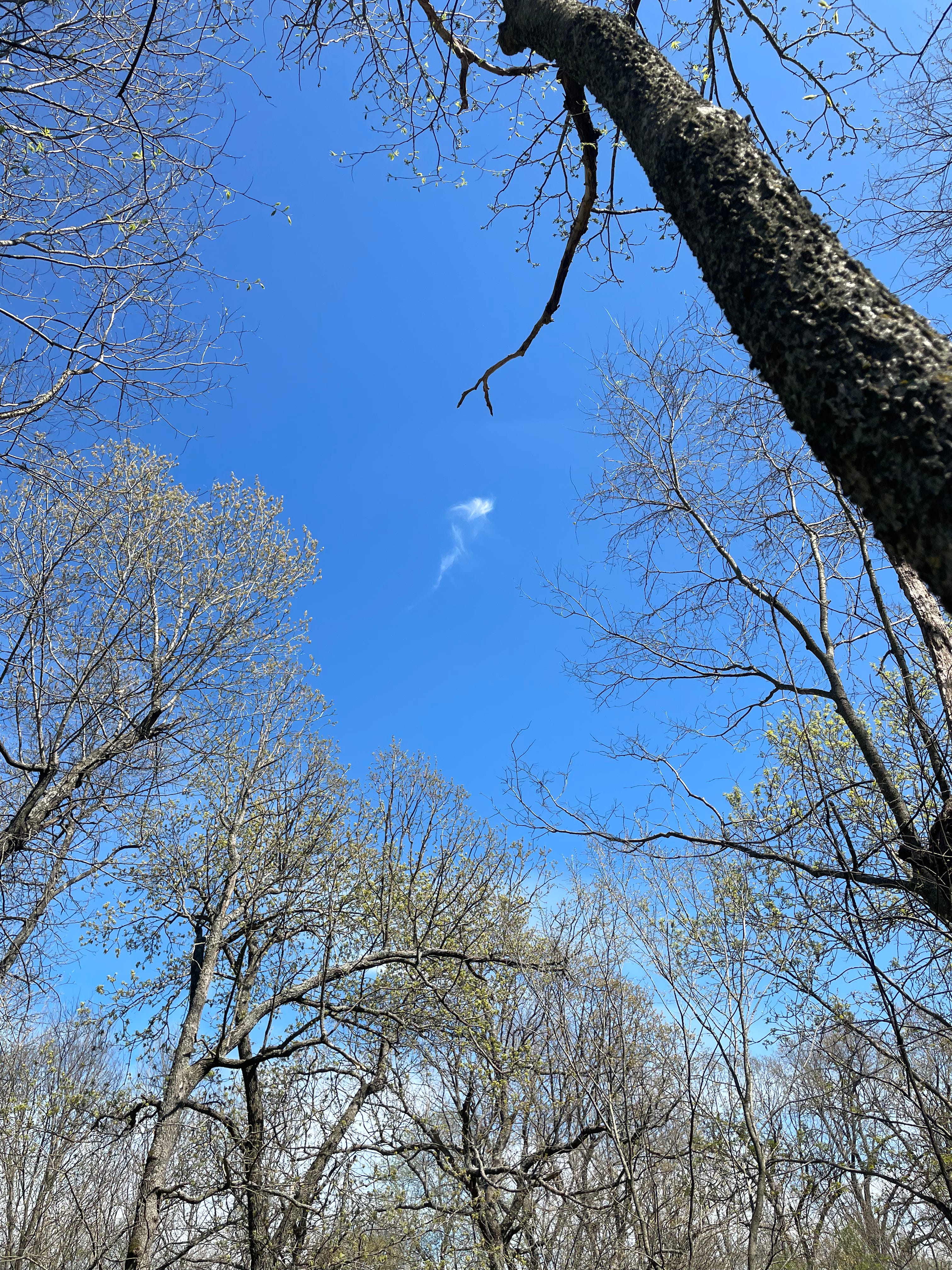
We put fences in to divide the pastures from the forests, leaving trees on the pasture side, where we can, so the Cattle can find a little shade in the Summer.
Step Two!
We weed the forest.
(In timber management, this is called “Timber Stand Improvement” or “TSI”.)
We go through with local Missouri Department of Conservation agents and identify trees to take out and trees to leave.
Usually we mark a fair number of Hickories and Elm and a few understory trees.
And we also mark some White Oaks who are growing crooked or whose tops are sick.
Most of these are two to twelve inches around at chest height, but some are large mature trees.
Over ten or so acres (a good chunk to do in a year), this can mean many thousands of trees.
And then the work really starts.
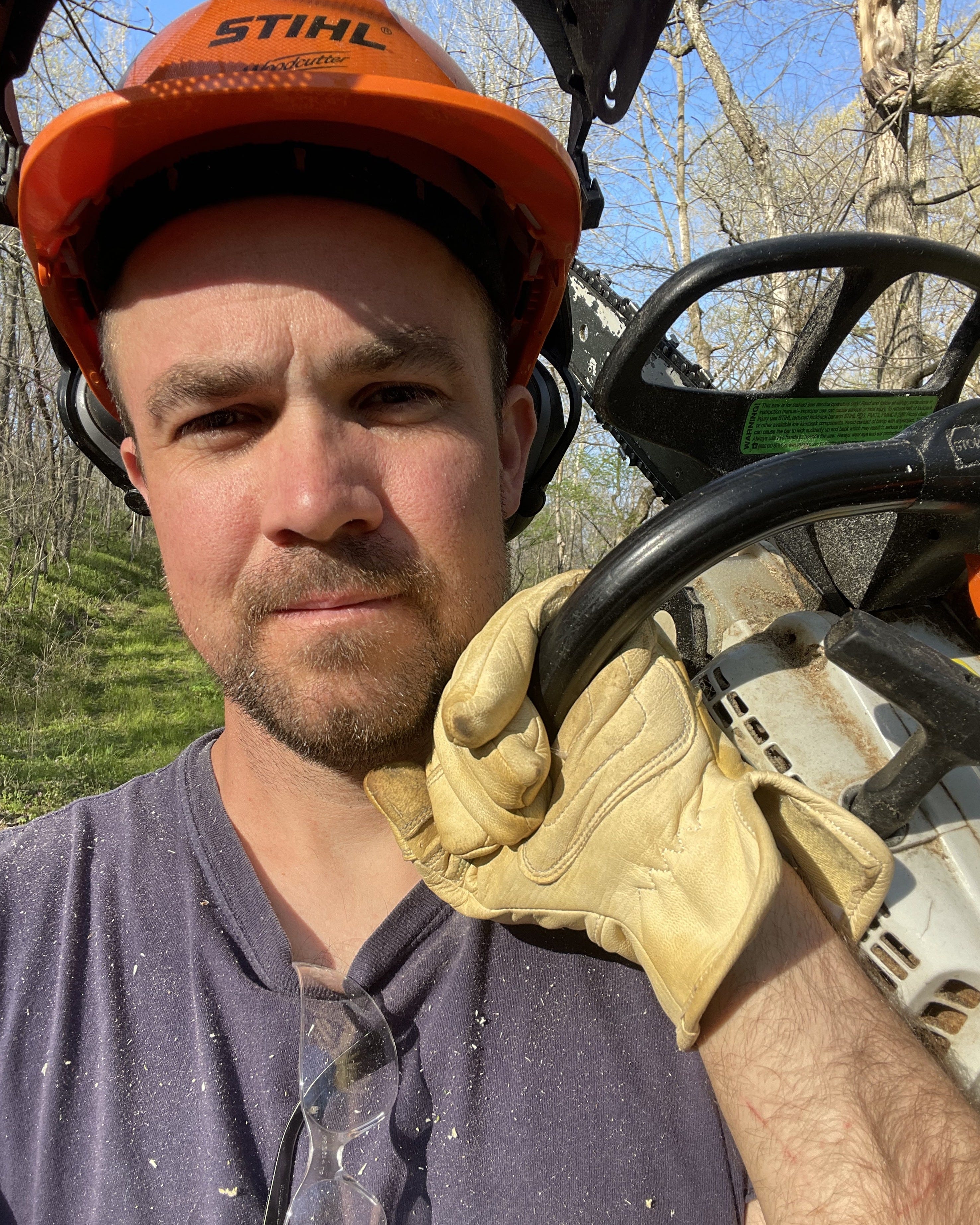
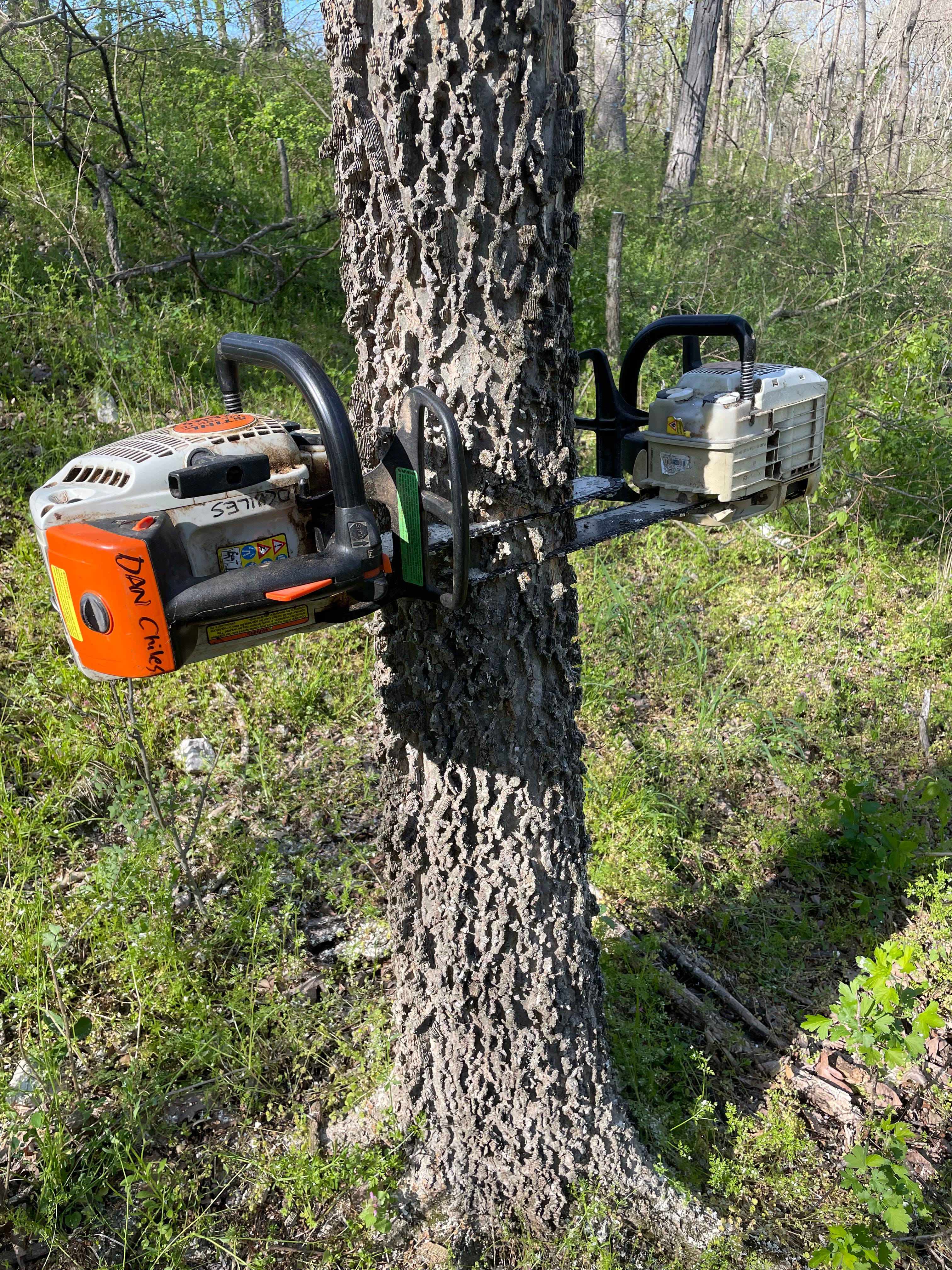
With chainsaws and lots of protective gear we go through and cut the marked trees down.
Clambering up and down the slopes,
Felling trees directionally into clusters of brush for the deer,
Working felled trees caught up in other trees down,
(In less mature stands of trees, they can get caught up in each other all the time)
Watching out for falling limbs and “barber chairs”,
(basically, trunks under tension that will snap back towards the chainsawyer).
Trees can have a lot of kinetic energy that can be released in unpredictable ways and you must always keep that in mind.
Here’s a part that could use some improvement:
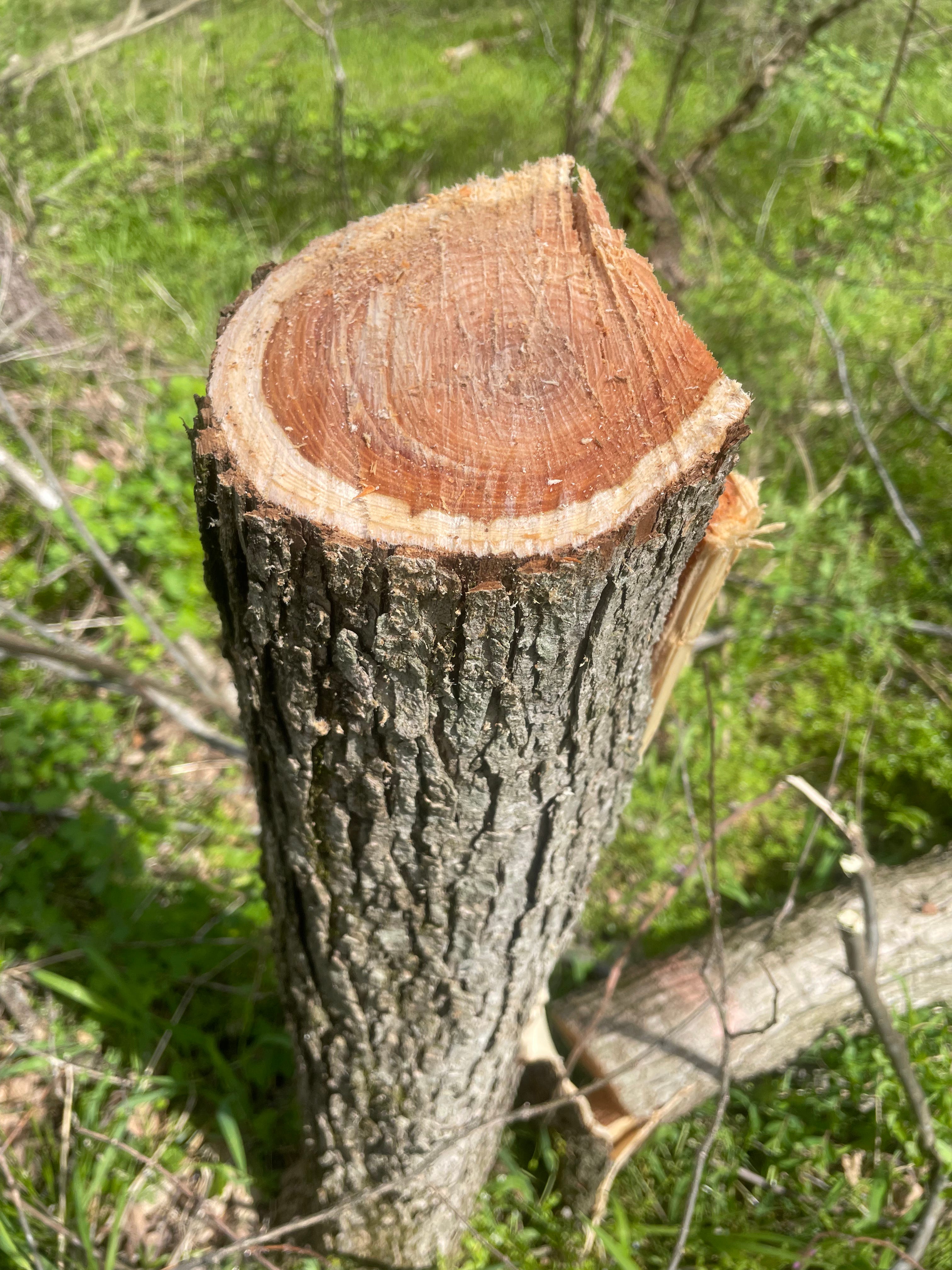
After we’ve cut a tree that we don’t want to grow back, we’ll add a little tree poison/herbicide to the narrow living part of the stump.
(It may be that we could find better poisons or methods in this step.
Experience, learning, and experimentation will show us better ways.)
If we cut down a White Oak that is crooked or sick, we leave its stump unpoisoned because the roots are still healthy and we want to give it a new start and grow back.
Step Three! (optional, but helpful)
Burning the understory in a low-intensity fire the next year can be really helpful for giving the White Oaks a good jump.
They seem to do well with an occasionally “cool” fire to clear out competition and it reduces the invasive multiflora roses.
Step Four!
Wait for 100 years…
And voila!
A forest filled with lots of mature White Oaks!
It may seem odd for a tree farmer to cut down thousands of trees.
But if you want to grow tomatoes, you have to pull out the competing plants that will keep the tomatoes from flourishing.
Is it the right approach?
Although I don’t enjoy killing trees, and it takes a certain kind of energy, we’re working to grow a forest with a specific diversity of plants and trees.
(Also, if there’s a butterfly on a marked tree or or the tree has a good vibe, I’ll leave it be.)
It seems like an ongoing conversation with the forest.
That’s the way gardening is.
Other than helping out the White Oaks (and hopefully Black Walnuts), weeding the forest is a great exercise because it forces me to think about three things:
What’s happening upstream of a problem? (The Cattle are eating the Oak saplings.)
Time is big and we can do a lot, and a lot can happen, inside of it if we step back from the immediacy of our anxiety.
Our actions will always have consequences on our non-human kin and environment, good or bad. While we can’t foresee everything, it’s appropriate to ask “what do we want our environment to look like?” And, “How do we envision, create agreement, and enact this better environment?”
Here’s a question for you, dear reader,
What kind of weeding helps you flourish?
Well it’s been a busy week on the farm, catching up on all the little things that need to be done while trying to stay aware of the big things, too. I got the irrigation lines working again and have been fixing things, watering, mowing, and making to-do lists up to my ears. In music world, I’ve been practicing and thinking about playing in Springfield and touring the Pacific Northwest this winter. Hit me up if you have places I should play! House shows are a delight, too.
Thanks for reading!
Until next time,
Will
Back in the Missouri Ozarks